


How Is Authentic Peking Duck Served in Singapore?
The number of courses a Peking duck arrives in tells you more about a kitchen than any line on the menu. Traditionally, Peking duck is served in two or three courses built around the skin, the meat, and sometimes a soup made from the bones.
That structure is one of the clearest indicators of how authentically an establishment prepares and serves the dish. Knowing it helps you compare Peking duck restaurants in Singapore and check what a whole-bird order includes, since a shortened version leaves out courses you might expect to receive.
What Is Peking Duck?
Peking duck is a Beijing imperial dish built around a whole duck roasted until the skin turns thin, crisp, and lacquered. The imperial kitchens that created it treated the roasting as a craft in its own right, and the glass-like skin remains the dish’s signature.
Because the skin loses its crispness as it cools, a good Peking duck is carved soon after roasting.
The skin is only the first part of the dish. Peking duck is designed to use nearly every part of the bird, with each course drawing on a different part of the duck. This is why a properly served Peking duck unfolds as a meal in stages, moving from the skin to the meat and then the broth.
The First Course: The Skin
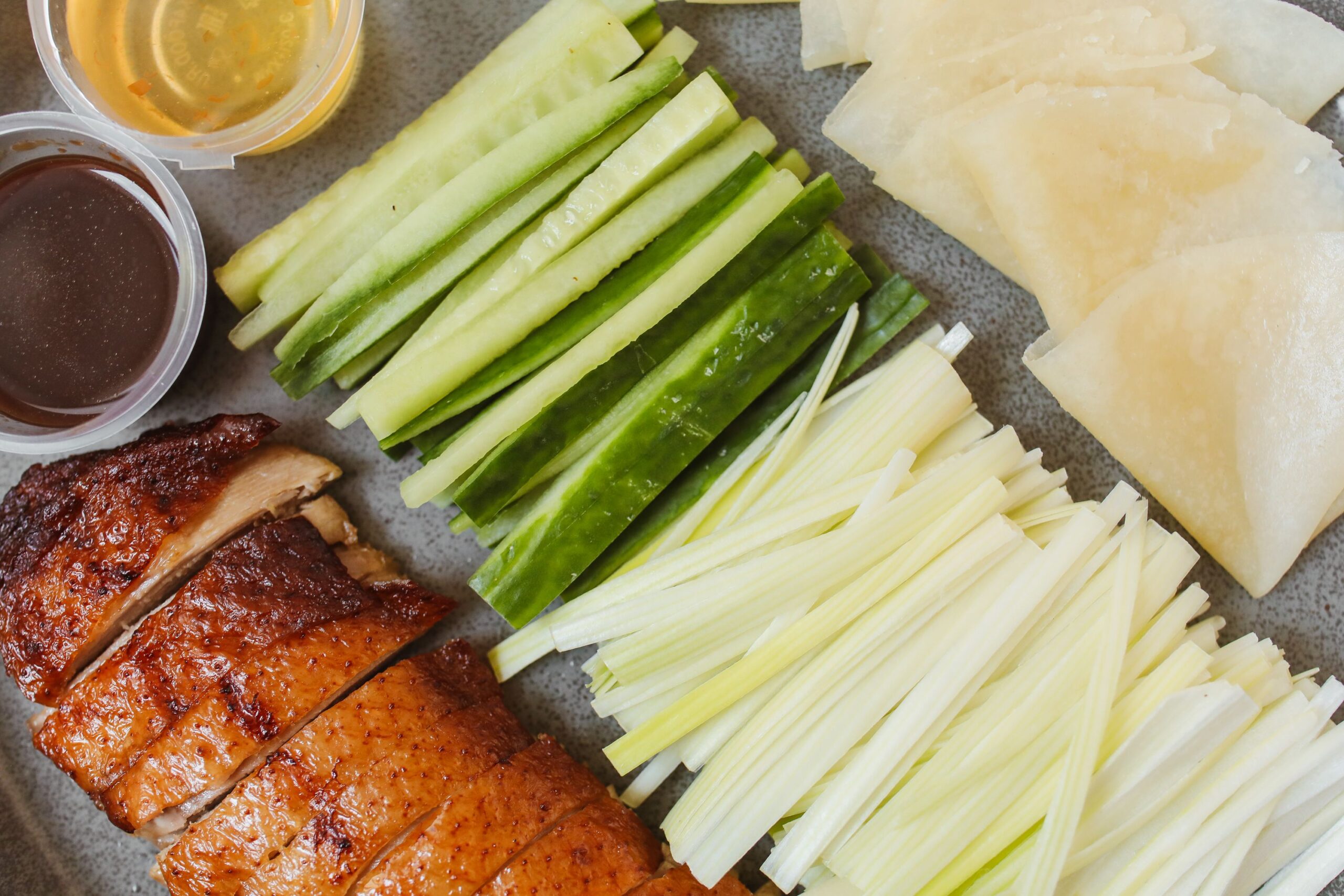
The skin is the star of the first course. It is sliced thin and served while still crisp, and diners eat it in one of two ways: dipped in a little sugar or wrapped in a thin pancake.
Sugar suits anyone who prefers the skin on its own, while the pancake wrap balances crisp, fresh, and sweet in a single bite. Standard pancake accompaniments include:
- Julienned cucumber for a cool, fresh crunch
- Spring onion for a sharp, savoury bite
- Hoisin sauce for sweetness and depth
To assemble a wrap, lay a slice of skin on the pancake, add a little of each accompaniment, and roll it up to eat by hand. The skin softens quickly as it cools, so it is best eaten as soon as it reaches the table.
The Second Course: The Meat
Once the skin has been served, the remaining duck meat becomes the second course. It is typically stir-fried, wrapped in lettuce, or served with a second round of pancakes.
Lettuce wraps are lighter and crunchier, while stir-fried duck with vegetables or noodles makes a more filling dish. The roasted flavour of the meat holds up well to bolder seasoning, which is why it often goes into the wok with ginger, spring onion, or bean sprouts.
Some restaurants let diners choose how the second course is prepared, which helps when a table has mixed preferences.
The Third Course: The Broth
The duck bones can be simmered into a soup as an optional third course. The result is a savoury broth that closes the meal gently after the richer first two courses. This course also makes use of the bones that would otherwise go unused.
A kitchen that offers this course is following the full traditional structure, unlike others that use a shortened version that stops once the skin and meat have been served.
How Authentic Is Peking Duck in Singapore?
Authenticity in Peking duck shows up in both the method and the service. Look for these markers when choosing where to order:
- Wood roasting, which gives the skin a gentle smokiness
- Air drying before roasting, which tightens the skin so it roasts crisp and glassy
- Tableside carving, where the chef slices the skin in front of you
Each of these markers reflects a step that takes time, which is why a shortcut usually shows in the skin. Skin that is chewy or greasy often means the duck was not dried or roasted for long enough.
A full multi-course structure is an authenticity signal that shows a kitchen has cooked the whole bird the way the dish was designed.
What to Expect When You Order
Peking duck is usually ordered by the whole bird, so a little planning goes a long way. A few practical points make ordering smoother, especially for a group.
- Pre-order at least a day or more in advance, since whole ducks are roasted to order.
- Confirm how many guests a whole duck serves before ordering for a group.
- Pair the pancake course with other dishes like dim sum if you want a fuller shared meal.
Settling these details early gives the restaurant time to confirm how each course will be prepared and served.
Is Peking Duck Worth Ordering for a Celebration?
A full-course Peking duck is a common centrepiece at reunion dinners and other family gatherings. The courses arrive one after another, which gives the table something to share and talk about between rounds.
For many diners, the multiple courses one duck yields make it worth the cost of a Chinese restaurant meal. Skin, meat, and broth from one bird give the table three dishes in a single order, so the price covers more of the meal than a single roast dish would.
Why the Course Structure Matters
The course structure, from skin to meat to broth, defines a properly served Peking duck. A kitchen that serves all three courses is working with the whole bird and following the tradition in full.
When ordering, look for a restaurant that tells you the course structure up front, and ask how each course is prepared.
Peach Garden is a Cantonese restaurant with over a decade of experience preparing Peking duck, serving it alongside signature Cantonese dishes and all-day dim sum. Contact us to plan a meal your family will remember.