


What Do You Eat at a Chinese New Year Reunion Dinner?
No meal in the festive calendar carries more weight than the reunion dinner for Chinese families. Almost every dish is chosen for the fortune it promises, and symbolism is as important as the flavour.
Most guides jump straight to Chinese New Year (CNY) reunion dinner venues and set menu prices, but we’ll start at the table, covering what gets served and why each dish earns its seat. We’ll also explain how many courses to plan for and what the full CNY reunion dinner menu typically costs in Singapore.
Why Every Dish on the Table Has a Meaning
Chinese New Year food runs on puns. A dish belongs to the CNY dinner menu when its name sounds like a word for abundance, surplus, or togetherness in Chinese dialects.
As a result, reunion menus look remarkably similar from one family or restaurant to the next. The key symbolic dishes make a return every year, with some restaurants adding modern twists to suit changing Singaporean tastes.
Last but not least, the order of service carries deep meaning too. The meal moves as a sequence, opening with the yusheng toss and closing on something sweet.
Dishes to Expect at a Chinese New Year Reunion Dinner
Yusheng, the Toss That Starts the Feast
Yusheng, also known as lo hei colloquially, is traditionally a raw fish and shredded vegetable salad that the whole table tosses together. Diners lift the ingredients as high as they can with long chopsticks while calling out auspicious phrases.
Each component of the yusheng adds its own wish; here are just a few common ones:
- Raw fish: Abundance through the year
- Shredded carrot and radish: Prosperity and advancement
- Crushed peanuts: A household full of gold and silver
- Plum sauce: Sweetness in the year ahead
Pen Cai, the One-Pot Centrepiece
Pen cai, also known as poon choi, packs abalone, sea cucumber, dried scallop, fish maw, prawns, and braised mushrooms into one layered casserole. Cooks place the most valuable ingredients on top and diners eat the dish from top to bottom.
Eating downward through the layers symbolises drawing on accumulated wealth. Beyond the symbolism, pen cai also wins favour in Singapore for its convenience, since a single pot delivers an entire banquet.
Longevity Noodles, Prawns, and Poultry
Noodles, shellfish, and poultry are popular choices for the remaining courses of a Chinese New Year reunion dinner menu.
Common dishes include:
- Longevity noodles: Keep each strand unbroken, since length represents long life
- Prawns: Order them for laughter, since their Cantonese name echoes a chuckle
- Whole chicken or duck: Serve with head and feet intact for family wholeness and a complete year
A Whole Steamed Fish for Surplus
The fish reaches the table whole, with head and tail intact. Since the word for fish sounds like the word for surplus in Mandarin, an unbroken fish signals a year that opens and closes in abundance.
Diners leave a portion on the plate so the surplus carries into the new year. This dish usually arrives as the final savoury course before dessert.
Sweet Endings
A sweet finish sets the tone for the year ahead. These three treats appear most often:
- Nian gao: Share this sticky glutinous rice cake, whose name sounds like rising higher each year
- Tang yuan: Serve these rice dumplings for family unity
- Mandarin oranges: Pass them around for gold and good fortune
Families also carry mandarin oranges on Chinese New Year visits to relatives over the following fifteen days of the festive season.
How Many Courses to Plan and What a Reunion Dinner Costs
A traditional reunion dinner set menu runs eight courses, since eight is the most auspicious number. However, six- and ten-course menus also appear, depending on table size.
Based on 2026 menus, the CNY reunion dinner menu price for a table of ten averages about S$1,170 at entry level, with service charge and GST added after the meal at many restaurants.
- Neighbourhood restaurants: Budget S$588 to S$868 for ten guests
- Hotels and upscale restaurants: Plan for S$1,288 to S$1,388 at entry level
- Premium banquets: Allow S$2,988 and above for shark’s fin and king crab menus
- Takeaway sets: Pay S$268 to S$368 for eight to ten guests
Multi-course hotel banquets generally work out to S$120 to S$180 per person. Prices climb once abalone, sea cucumber, and premium seafood join the menu.
Timing deserves equal attention. The eve of CNY 2027 falls on Friday, 5 February 2027, and many restaurants run fixed sittings, commonly two for dinner.
If you’re booking a CNY reunion dinner in Singapore, confirm the date and sitting time early. Popular restaurants also collect a deposit per table in advance to prevent diners from cancelling.
Dining Out or Hosting at Home
The choice comes down to who does the cooking and who sets the schedule.
- Dine out: Let the restaurant kitchen handle a menu that takes a full day to cook
- Host at home: Enjoy the whole evening without watching the clock for a seating time
Dining out suits larger extended families who want the full banquet without the kitchen work. Multi-generation tables do best in a Chinese restaurant with a private room and karaoke, where the family can keep singing after the meal. Check with the restaurant if such an arrangement is possible, and request the room when booking.
Families with elderly relatives or young children should weigh travel time on the eve and parking. A long drive on a crowded night tires grandparents and children before the meal even begins.
In contrast, hosting at home keeps the evening flexible, though the cooking falls to the host. Pen cai and whole braised dishes are usually hard to execute in a home kitchen, so many families turn to Chinese food catering in Singapore for these centrepiece dishes instead of making them. If you’re thinking of hosting your next reunion dinner at home, a robust home buffet setup is necessary for smooth running of events and satisfying your guests.
Plan Your 2027 CNY Reunion Dinner With Peach Garden
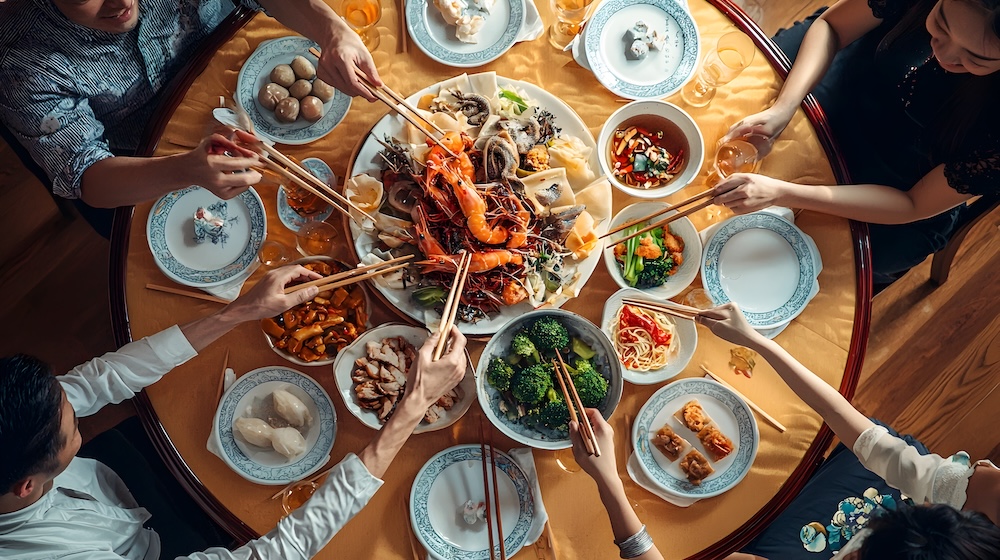
Braised abalone, whole steamed fish, and pen cai expose every flaw in technique, so they rank among the hardest dishes in Chinese cooking. A skilled kitchen matters as much as the menu itself.
Peach Garden has prepared these menus for over a decade across our outlets. Reunion dinner set menus, yusheng, and pen cai are available for dining in or taking home.
Explore our Chinese New Year menus and reserve early, so the whole family can toast, toss yusheng, and sing together under one roof.