

What Is the Best Setup for a Mini Buffet? A Home Buffet Table Guide
Hosting at home is a favourite choice for many families in Singapore, since it feels relaxed and offers full privacy over a gathering at a restaurant.
A good spread depends far more on layout and flow than on the food itself. In compact HDB flats and condos, planning where the buffet goes before the food arrives separates a smooth gathering from a cramped one.
This guide walks through how to plan the hosting space, the best home buffet table setup for different home types, and the small details that pull the whole table together.
What Is the Best Setup for a Mini Buffet
The best buffet setup depends on space, not scale.
A mini buffet only needs a flat surface, such as a dining table, kitchen island, or console. Position it close to the kitchen for easy refills, and away from direct sunlight or busy doorways. If possible, place the table within an easy walking loop, so guests can serve themselves and step away without crowding the spread.
This matters most in HDB flats and condos, where every metre of floor space counts.
Before setting up your buffet table, imagine how your guests may move around in the space. People tend to gather where the food is, so a table pushed into a corner keeps the crowd out of walking areas. A spot near a wall, with room to approach from two sides, usually works better than one positioned in the middle of the room.
Plan the Layout Before the Food Arrives
Measure the space and map the guest flow right before booking, not after placing your buffet order. Trace the path from entrance to buffet to seating, identify power outlets for warmers and clear walking routes in advance.
A quick sketch of the layout on your phone helps spot a bottleneck before it happens. Layout is as important as planning the mini buffet menu, since it decides how many dishes can fit on the venue’s tables.
From there, zoning keeps everything organised. Split the home into distinct areas so the space feels calm rather than crowded:
- Buffet line: The main table where guests serve themselves.
- Drink station: Set apart from the food, so pouring never blocks the queue.
- Seating area: Enough chairs and surfaces for plates once guests have served up.
- Holding spot: A corner for bags, coats, and spare chairs, out of the traffic.
Keeping these zones separate lets guests top up their drinks while others move along the buffet, and nobody gets stuck behind someone deciding between dishes.
Buffet Table Set Up for Different Home Layouts
HDB Flats and Compact Condos
A straight line along a wall or corridor suits narrow layouts best.
Place plates and cutlery at one end, mains in the middle, and desserts at the far end, so guests move in one direction without doubling back. For tighter corners, an L-shaped layout along two walls frees up room while still giving the food a clear start and finish.
Many hosts also carve out space with a few small changes.
- Pushing sofas back against the wall
- Folding away the coffee table
- Turning the kitchen island into a compact mini buffet for smaller gatherings
Even a console table against a hallway wall can hold a tidy spread for eight to ten people.
Larger Condos and Landed Homes
Bigger homes allow a few smaller stations instead of one long table.
- Keep a main hot food line indoors near the kitchen, where refills are quick and warmers stay plugged in.
- Set up a drinks or dessert station elsewhere to spread guests across the space and keep them mingling, instead of clustering in one room.
Outdoor areas open up more options, though they need a little more thought.
For food placed on a balcony or patio, choose shaded and level ground for warmers. Take extra care around cables, steps, and uneven flooring, since a wobbly chafing dish outdoors is a hazard no host wants.
Catering Table Setup Essentials
Start a catering table setup with plates, cutlery, and napkins, then add starters, mains and sides, with desserts last. The setup order shifts a little depending on the catering format you choose, though the plates-first principle holds across all of them.
Here are some tips on how to keep a buffet table running smoothly over a long afternoon:
- Cover between servings: Keep chafing dishes closed to maintain heat and freshness.
- Space the dishes out: Leave gaps along the line to prevent bottlenecks.
- Separate hot and cold: Keep the two apart so nothing spoils in the humidity.
- Refill from the back: Top up quietly without pulling the whole tray off the table.
These small routines keep food fresh throughout the day, ensuring every dish tastes the way it should.
The Small Details That Make a Buffet Setup Feel Polished
Simple styling choices lift a home buffet setup without much effort:
- Match your tableware: Disposable plates, cups, and cutlery in one colour theme.
- Label each dish: Tent cards so guests know what they are serving themselves.
- Group the condiments: Gather the sauces on one tray instead of scattering them around.
- Add a finishing touch: Greenery, a runner, or coordinated linens to tie it together.
None of these takes long, yet together they turn a functional table into one that looks considered. Guests notice the difference, even if they cannot always name it.
Bringing It All Together With Peach Garden
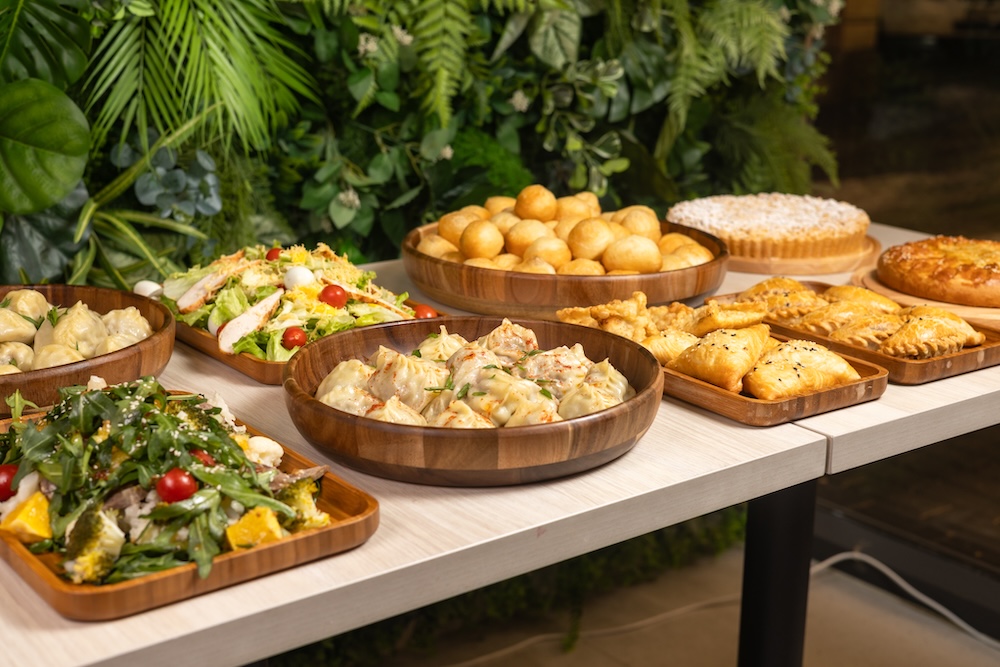
A well-planned layout can carry a gathering even before the food is considered, and getting both right is what makes an occasion memorable.
Hosts who prefer to skip the DIY setup can lean on our catering service in Singapore. We deliver and arrange everything to suit your home’s layout and guest count, from the chafing dishes to the serving line.
Contact Peach Garden to find the right buffet or mini buffet package for your space.