You open two Chinese restaurant menus and see the same steamed fish, with one priced at three times the other. Nothing on either menu explains the gap.
The explanation sits in places a menu cannot show, from the grade of a dried scallop to the number of hands that shaped a single dumpling. That is why cheap and expensive versions of the same dish are rarely the same dish. This guide breaks down what you are paying for, how to spot value before you book, and when a higher bill earns itself.
Price is the number on the bill, value is what that number buys, and worth is whether it suits your occasion. A birthday dinner for three generations and a quick lunch for two weigh those three very differently.
Why Chinese Restaurant Prices Vary So Widely in Singapore
Good Chinese food in Singapore spans hawker stalls, casual restaurants, and hotel dining rooms, and the same dish name can appear at every tier with almost nothing else in common. Picture two plates of char siew arriving at your table, one made with frozen shoulder and a sweet glaze, the other with chilled pork jowl finished over charcoal. Both menus say char siew, yet the two plates cost different amounts to produce and taste like different dishes.
The top tier adds costs beyond the plate, since Chinese fine dining in Singapore means premium ingredient sourcing, higher staff-to-table ratios, and dining rooms built for long meals rather than fast turnover.
What You Are Actually Paying For
The Grade of the Ingredients
Chinese cuisine prices heavily on ingredient grade, and dried and premium items carry the widest range. Abalone, sea cucumber, dried scallop, and fish maw each cover a broad spread of quality under a single name, so two dishes with the same label can differ sharply in cost and in what ends up on your plate.
Live and frozen seafood show the gap clearly. A steamed fish is the clearest test, since a live soon hock costs noticeably more than a frozen fillet and you can taste the difference in texture if you pay attention. Live fish holds together in firm, sweet flakes, while a thawed fillet tends to turn soft.
Kitchen Skill You Can Taste
Technique is the hardest cost to see and the easiest to taste. You can find it in the wok hei of a fried dish, in the timing on a steamed fish, and in the balance of a braise that takes hours rather than minutes.
Use dim sum as your diagnostic. A har gow with a thin, pleated, non-gummy skin signals trained hands, and a dim sum restaurant in Singapore that diners rate highly on its cheaper items is usually strong on the expensive ones too. Consistency across visits matters more than a single good meal, since holding a standard across a full service is what separates a restaurant from a lucky kitchen.
Service, Space and Time
Part of the bill buys the room and the pace. That includes whether staff debone the fish at the table, whether the seating is timed, and whether the space is quiet enough for you to hold a conversation. Private rooms, longer table times, and attentive service cost money to provide. They are also exactly what some occasions need and others can happily skip.
How to Judge Value Before You Book
Most of the signal is available before you make the reservation, if you know where to look. Five checks help you judge whether a Chinese restaurant earns its price.
- Menu specifics, meaning grades and origins listed for premium ingredients rather than the ingredient name alone
- Labour-intensive signatures, since slow braises and handmade items show a kitchen investing in skill
- Reviews that mention repeat visits, because consistency across several meals says more than one standout evening
- What the price includes, particularly service and the room for occasions that need a private space
- Years of standing, since holding a standard through Singapore’s dining market is itself a quality signal
Matching the Restaurant to the Occasion
Value is relative, since the right spend depends on who is at your table and what the meal is for. The best Chinese restaurant in Singapore for one occasion is rarely the best for another.
Family Celebrations
If you are planning a birthday dinner in Singapore, expect the table to span three generations, which makes menu range, table size, and noise tolerance more important than a tasting menu. This is the occasion where a private room and a set menu pay off, since they remove the ordering negotiation and keep your whole group together.
Business Dinners and Client Hosting
A business dinner in Singapore is judged on room and rhythm as much as food. You need to be heard, the meal needs pacing for conversation, and the bill needs settling discreetly. Chinese set menus suit that format because nobody has to order and everyone eats the same courses. A corporate dinner venue in Singapore that you choose well also signals seriousness to your client.
Hosting Visitors From Overseas
If you are deciding where to bring foreign friends to eat, a hawker centre is the natural first stop, since that is where Singapore’s local food for tourists is at its most famous. Hawker food is excellent, but it leaves visitors without a sit-down meal that shows the country’s Cantonese fine dining heritage.
Pairing the two works well, with hawker food for one meal and a proper Chinese restaurant for another, so your guests taste both the street-level and the refined side of local dining. Peking duck, steamed fish, and dim sum travel well across palates, which makes them safer choices for first-time visitors than heavily spiced or texture-heavy specialities.
Where the Price Earns Itself at Peach Garden
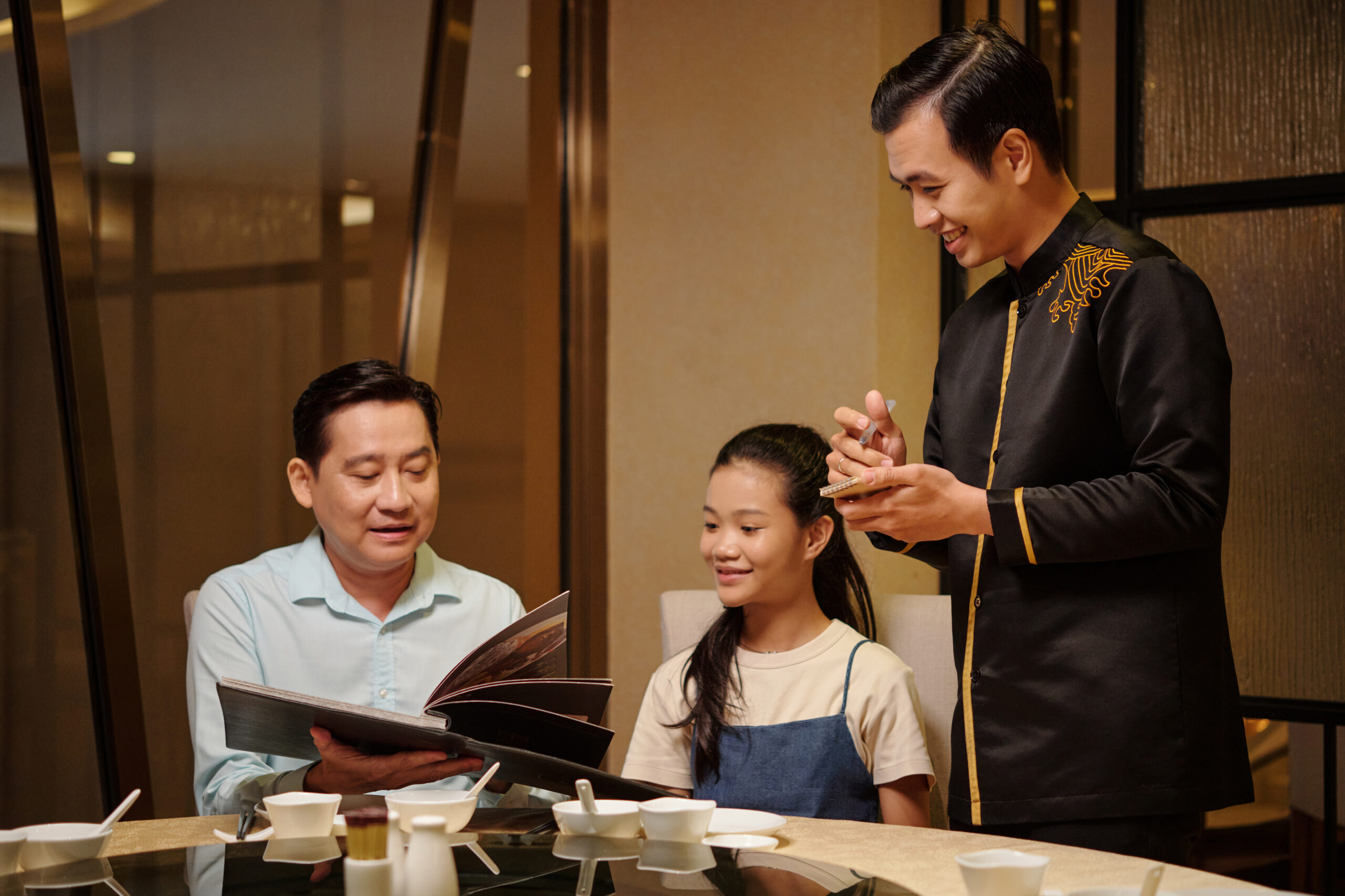
A Chinese restaurant earns its price when the kitchen delivers what the bill implies, meal after meal. That is the standard we hold ourselves to across six outlets, with menus built on premium ingredients, classical Cantonese technique, and handmade dim sum, plus private dining rooms for occasions that need them. Our OCBC Centre outlet has been listed in the Tatler Asia Dining Guide from 2008 to 2025, and the group has now operated for over a decade.
So, is Peach Garden expensive? Our fine dining outlets at OCBC Centre and The Heeren sit at the top of that range, while our casual outlets at Chinatown Point, The Metropolis, Changi Airport Terminal 2, and Thomson Plaza—which features ample space for dine-in patrons as well as private suites for intimate gatherings—suit everyday meals and special occasions alike. Tell us your occasion and guest count, and we will point you to the outlet where the spend makes sense.
Browse our menus and reserve a table at your nearest outlet to plan a celebration, client dinner, or family meal worth talking about.

