

What’s the Difference Between Dim Sum and Yum Cha? A Singapore Diner’s Guide
Ask most Singaporeans about their weekend plans and dim sum or yum cha might very well be the answer.
The terms are often used interchangeably to describe carts trundling between tables, pots of tea, and steamed baskets moving across a lazy Susan. However, few diners realise the two Cantonese terms technically describe different things.
Untangling them is not just trivia. Knowing the meaning of each term changes how you order, plan a group outing, and book a table for a bigger celebration.
This guide explains what dim sum and yum cha each mean, what the typical spreads consist of, and whether the distinction matters in practice.
What Is Dim Sum?
Dim sum translates loosely from Cantonese as “touch the heart”, referring to the small, shareable dishes like har gow, siu mai, char siew bao, and cheong fun. The dishes are traditionally served from trolleys or bamboo steamers that move table to table so diners can point and choose as they go.
Ordering has moved with the times too. Many restaurants now pair the trolleys with a paper order chit or a menu at the table, so guests who miss a basket the first time round can still flag it down on the next pass.
Many restaurants also now offer all-day dim sum in Singapore, opening the category up beyond the traditional morning window, so a craving for har gow at dinner or char siew bao mid-afternoon does not have to wait until the next morning.
What Is Yum Cha?
The meaning of yum cha is “drink tea” in Cantonese, built from yum (to drink) and cha (tea). Locals use it as a verb as often as a noun, as in “let’s yum cha this weekend”, referring to the occasion of going out to eat and drink tea together.
Yum cha originated in the teahouse culture of southern China, particularly Guangdong and Hong Kong, where labourers and traders stopped in for tea between errands.
Tea was the anchor of the gathering, valued as much for cutting through the richness of fried and steamed food as for the company around the table, and small dishes were added alongside it over time until the two became inseparable.
What Does Yum Cha Consist Of?
A yum cha spread typically includes a pot of tea, commonly oolong, pu-erh, or jasmine, alongside a rotating selection of steamed, fried, and baked dishes shared across the table.
Steamed dumplings and buns usually lead the charge, fried items like spring rolls and turnip cake follow, and something sweet, such as egg tarts or mango pudding, closes the meal.
A proper session runs longer than a quick meal, often stretching past an hour as the pot gets topped up and the trolleys make several more rounds.
The etiquette of yum cha is also an art in and of itself. Guests pour tea for others before themselves, and a light tap of two fingers on the table serves as a quiet thank you when someone else tops up your cup.
Singapore diners looking for a more elevated version of this ritual can find it at Chinese fine dining restaurants, which pair traditional trolley service with an expanded tea and dish selection and private rooms for larger tables.
Dim Sum vs Yum Cha: What's the Key Difference
While yum cha is the occasion of tea and shared eating, dim sum is the food served during that occasion.
The two terms get confused because they are almost always experienced together. Most diners never have a reason to separate them in everyday conversation, since ordering dim sum practically always happens over a pot of tea, and yum cha practically always means dim sum is on the table.
Does the Difference Actually Matter?
For most everyday outings in Singapore, going for dim sum or yum cha is understood the same way. As such, the distinction rarely changes how a table is booked or a meal is ordered.
The distinction becomes more relevant when planning for larger groups or events. For example, a family marking a birthday, a reunion, or a post-ROM lunch over a seated yum cha experience is booking an occasion, complete with tea service, a private room, and time to linger over several rounds of dishes.
Meanwhile, an office marking a project milestone with dim sum catering is usually after something else entirely, since catering brings the dishes to the workplace without the trolley service or the tea ceremony that defines yum cha.
Knowing which one you want makes the booking process more straightforward, and the event closer to what you had in mind, from the first phone call.
Enjoy Dim Sum and Yum Cha at Peach Garden
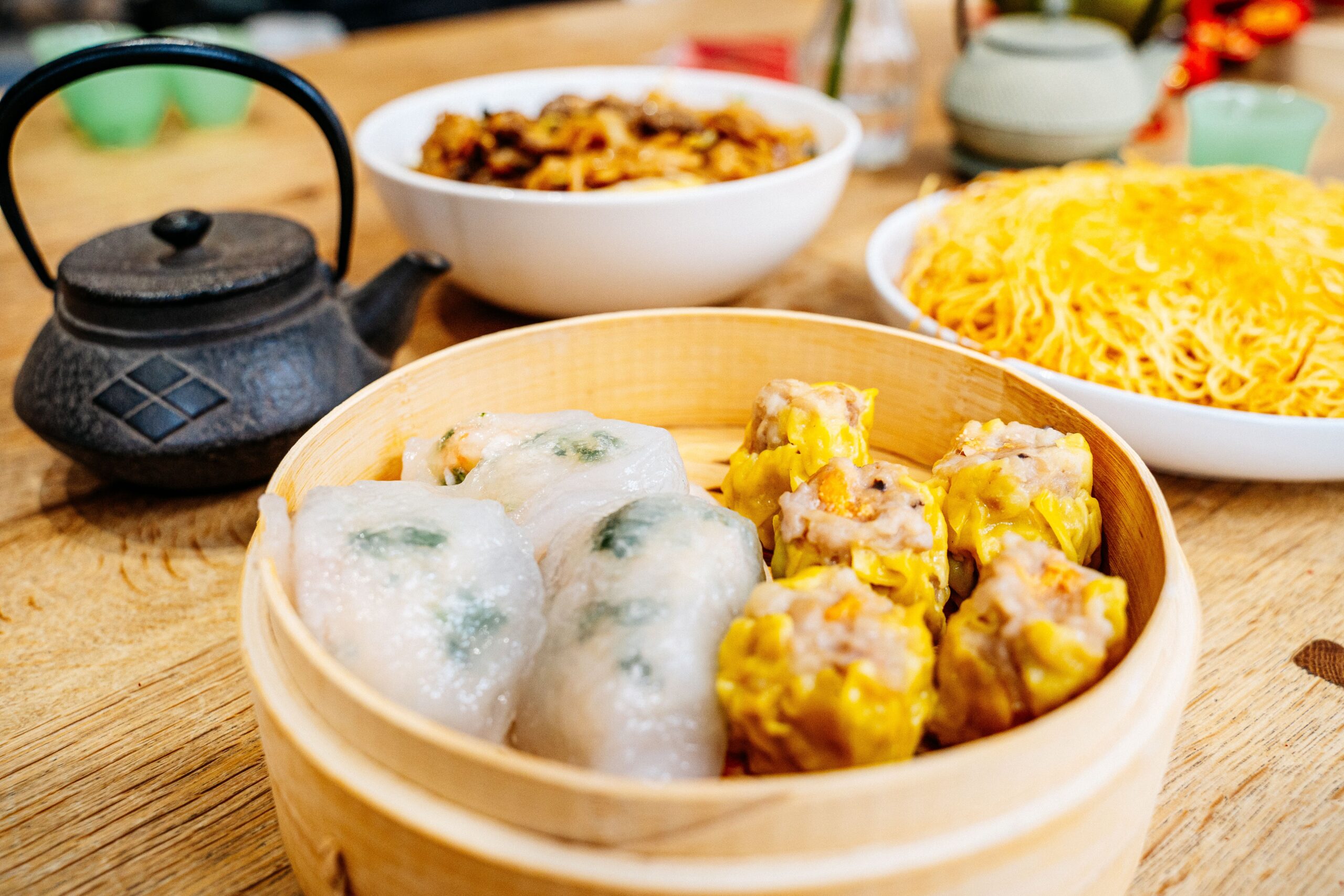
Whichever term you reach for, the experience comes down to the same thing: good tea, good company, and a table full of freshly prepared dishes.
At Peach Garden, we serve an extensive dim sum menu alongside a curated tea selection across our six outlets in Singapore, with each basket handmade fresh daily and suited to a casual weekend yum cha as much as a larger group booking.
Book a table to work through the trolley yourself, or enquire about catering to bring the same spread to your next office gathering or family celebration.